Home
Services ▼
Call +1-866-315-0243
The Problem With Repellent Sprays

THE REPELLENT SPRAY TRAP

  • 01
    Repellents kill visible workers only at the surface level
  • 02
    Colony detects the chemical barrier and splits into satellite nests
  • 03
    Satellite nests increase the colony's footprint throughout the structure
  • 04
    Problem spreads to new areas rather than being eliminated
The Correct Protocol

THE CORRECT APPROACH

  • 01
    Non-repellent bait is carried by workers directly to the queen
  • 02
    Colony cannot detect the active ingredient in non-repellent formulations
  • 03
    Population collapses from within over 3 to 10 days
  • 04
    Permanent elimination at the source, not redistribution

Certified Ant Control in Cincinnati, Cincinnati, OH: The Non-Repellent Protocol That Actually Ends the Problem

The ant population you are seeing is a fraction of the actual colony. The queen, brood, and satellite nests are hidden in the harborage zone. Show Me Pest Control's treatment in Cincinnati reaches all of them through non-repellent bait transfer technology.

Non-Repellent Protocol Species Identification Perimeter Barrier Colony Elimination
Call +1-866-315-0243 Now Free Estimate
Licensed Ant Control service in Cincinnati, OH - Show Me Pest Control

Why Show Me Pest Control Gets Different Results in Cincinnati

Four core protocols that produce colony-level elimination -- not surface suppression.

✓

Species Identification Determines Protocol

Every treatment plan starts with species ID. The product we apply for odorous house ants is not the same product we apply for carpenter ants or fire ants -- the species determines the bait formulation, placement location, and follow-up schedule.

✓

Non-Repellent Bait Transfer Technology

The active ingredient in non-repellent bait is undetectable to the ant. Workers carry it back to the harborage zone and pass it to other workers, to the queen, and to the developing brood. The collapse is colony-level, not surface-level.

✓

Non-Repellent Exterior Perimeter Treatment

Repellent products at the perimeter push ants to find new entry points. Non-repellent products let them walk through freely -- carrying the active ingredient into the colony. We use non-repellent formulations exclusively at the perimeter, maintaining the transfer mechanism that eliminates the population.

✓

Carpenter Ant Void Treatment

Carpenter ants do not eat wood -- they excavate it for nesting. Finding sawdust-like frass near wood members, hollow-sounding structural timbers, or large black ants near window frames may indicate an established carpenter ant colony in the wood structure. Void injection and perimeter exclusion are the correct responses.
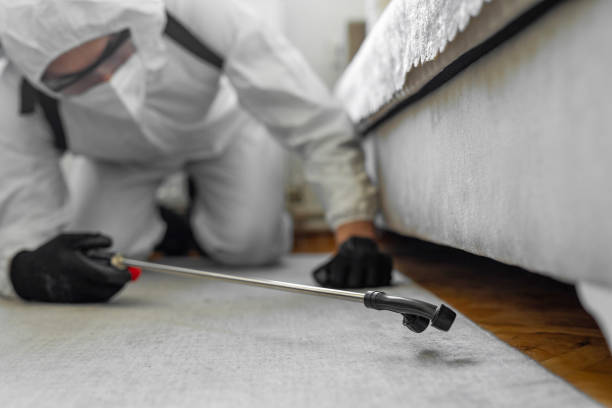
Professional Ant Control technician working in Cincinnati, OH

What Professional Non-Repellent Protocol Actually Does

What the spray kills is the forager -- the worker you can see. The workers you cannot see, the queen, and the developing brood are in a harborage zone that is typically behind a wall, inside a void, or in the foundation soil adjacent to the structure. The colony detects the repellent barrier and redirects around it, establishing new satellite nests on the far side. This is why ants treated with repellent products tend to appear in new areas of the home within 7 to 14 days.

Trophallaxis is the mechanism that makes colony-level elimination possible. When non-repellent bait is placed in the harborage zone or at a point where foragers return with food, they share it directly with the queen and the developing larvae. The active ingredient spreads through the entire population because no ant in the colony can detect it. The collapse timeline is 3 to 10 days for most species, depending on colony size and the level of bait acceptance.

Ant problem that gets worse every time you spray in Cincinnati? Call +1-866-315-0243. Our protocol does not scatter the colony, it eliminates it. Non-repellent bait, species ID, correct placement.

Consumer bait products have two limitations that professional treatments address. First, many homeowners contaminate their bait stations by applying repellent spray in the same area -- the colony detects the repellent and avoids the entire zone, making even correctly placed bait inaccessible. Second, colonies exposed to the same bait formulation repeatedly develop aversion, avoiding the attractant even when it appears fresh. Professional treatment uses bait formulations that rotate active ingredients and are placed in locations that have not been contaminated by prior repellent applications.

Carpenter ant treatment begins with confirming that you have carpenter ants rather than any other large black ant species, and confirming that an active gallery exists within the structure. Coarse sawdust-like frass near structural wood members, particularly window headers, door frames, sill plates, and roof soffits -- especially where moisture damage is present or was repaired in the past -- is the primary diagnostic sign. Hollow-sounding timbers when knocked and large black ants near the frass location confirm the assessment. Void injection delivers the active ingredient directly to the gallery where the colony is nesting, rather than spraying the surface where foragers are observed.

Recurring ant pressure in Cincinnati, OH is largely seasonal and predictable. Spring budding creates the maximum colony expansion pressure of the year. Summer heat and drought push foragers into cooled structures. Fall cooling brings foundation ingress. For properties that experience recurring annual infestations, a program that maintains a non-repellent perimeter through the spring and summer eliminates the conditions that allow colonies to establish inside the structure in the first place -- and is priced substantially below repeated reactive treatment costs.

24/7 Emergency Ant Control experts in Cincinnati, OH

Get a Free Estimate

Species identified, harborage zone mapped, protocol explained -- on the first call.

Call +1-866-315-0243

Services Included in the Show Me Pest Control Ant Protocol

Every service designed around species identification and non-repellent bait transfer technology.

Reliable Ant Control contractor in Cincinnati, OH by Show Me Pest Control

Ant Species Identification and Colony Assessment

We identify the species first -- Argentine, odorous house, pavement, fire, or carpenter -- because the treatment protocol depends entirely on the species. Misidentification wastes money and scatters the colony.

Non-Repellent Gel and Granular Bait Treatment

Non-repellent gel and granular bait placed where the colony feeds, not where it travels. The entire population is reached.

Exterior Non-Repellent Perimeter Barrier

A non-repellent exterior barrier used with gel bait creates two simultaneous pathways for the active ingredient to reach the colony.

Carpenter Ant Void Injection Treatment

Carpenter ant treatment requires direct gallery access. Void injection delivers the active ingredient to the source -- not to the foragers you can see.

Fire Ant Mound and Broadcast Treatment

Individual mound treatment and broadcast granular treatment for fire ant pressure in yards and lawn areas. Fire ant populations in Cincinnati, OH can develop rapidly in warm months -- early season treatment prevents mound establishment.

Recurring Seasonal Ant Prevention Program

Recurring visits that maintain a non-repellent perimeter through the spring budding phase and summer heat prevent the conditions that allow colonies to establish indoors.

How the Show Me Pest Control Ant Protocol Works in Cincinnati

Clear, sequenced, no surprises.

1

Call -- Species Identified by Phone or On-Site

We ask about trail patterns, ant size, and location. Species identification begins on the call.

2

Non-Repellent Bait Placed in Harborage Zones

Gel bait goes where the colony feeds and communicates, not where the trail is visible. Harborage zone placement is the key.

3

Perimeter Treatment Applied at Exterior

Interior and exterior treatments are applied the same visit. The two pathways reinforce each other.

4

Follow-Up Confirms Colony Collapse

We confirm colony collapse at the follow-up rather than assuming the single treatment was sufficient. This is where persistent satellite nests are identified.

Results From Show Me Pest Control Ant Treatments in Cincinnati, Cincinnati, OH

Customers who switched from retail spray products to the Show Me Pest Control non-repellent protocol.

★★★★★
Same trail every morning for weeks, spray every night, repeat. Show Me Pest Control figured out the satellite nest location was in the wall behind the kitchen appliances. Gel placed in the cabinet base. Activity gone within a week. Follow-up confirmed it. Three months later, still nothing.
Homeowner, Cincinnati, Cincinnati, OH
★★★★★
Hardware store baits stopped working after the second round. Show Me Pest Control explained the aversion issue -- colonies learn to avoid certain attractant compounds after repeated exposure. Different professional formulation, correct placement. The colony was gone in a week.
Homeowner, Cincinnati, OH
★★★★★
The coarse sawdust near my window frame turned out to be carpenter ant frass. Show Me Pest Control identified it correctly on the first visit, located the gallery, injected directly into the void. No new frass at the one-month follow-up. The other company I called first had no idea what they were looking at.
Homeowner, Cincinnati, Cincinnati, OH
Affordable Ant Control solutions in Cincinnati, OH

Ant Treatment Questions -- Show Me Pest Control Answers

Every time you spray a repellent product on an ant trail, you are triggering the colony's relocation response. The workers on the trail are killed, but the colony -- the queen, the developing brood, the satellite nests -- survives and establishes new foraging routes away from the treated area. This is why the ants appear in a different part of the kitchen or in a different room. Non-repellent bait is the correct approach because it works with the colony's behavior rather than against it -- workers carry the bait back to the source, and the population is eliminated rather than redistributed.
The size difference is immediate: carpenter ants are large -- often 3/8 to 1/2 inch for the major workers -- while odorous house ants, pavement ants, and Argentine ants are much smaller. More importantly, the carpenter ant's presence signals a structural concern that the other species do not. Finding coarse sawdust frass near wood members means gallery excavation is active. The wood damage can be significant in older galleries. Other ant species leave no structural evidence and are managed with bait and perimeter treatment. Carpenter ants require gallery location and void injection as part of the protocol.
Most homeowners see a significant reduction in activity within 5 to 7 days of professional bait placement. Colony collapse is typically confirmed within 10 days. The initial 24 to 48 hours may show increased activity as forager recruitment increases -- this is normal and indicates the bait is being accepted and transported. The key during this period is to leave the bait undisturbed and to not spray repellent products anywhere near the bait stations, which would contaminate the placement and collapse the transfer mechanism.
Bait placements are made in locations inaccessible to children and pets by design. The active ingredient amounts in gel bait formulations are small compared to spray products, and the placement methodology keeps them in protected zones. Your technician will walk you through the specific placement locations at every visit and confirm re-entry timing based on the products used and the ventilation in your space.
We treat fire ant mounds and the surrounding lawn area. Mound treatment eliminates the visible population. Broadcast treatment prevents the satellite mound establishment cycle that typically produces 20 to 40 new mounds per season on an untreated property in Cincinnati, OH. The timing and formulation are selected based on the season and the density of the existing mound population.
Two visits -- initial treatment and a 14-day follow-up -- handle most ant infestations. The follow-up is critical: it confirms colony collapse, addresses satellite nests that became apparent after the initial treatment, and makes any bait placement adjustments if the colony responded differently than expected. Properties near heavily wooded areas or with structural features that attract ant foragers seasonally typically benefit from a recurring program to prevent re-establishment each season.

Ready to End the Ant Problem?

Same-day assessment in Cincinnati. Species identification and non-repellent bait placed on the first visit.

Call +1-866-315-0243

Serving Cincinnati and surrounding Cincinnati, OH communities
Top rated local Ant Control specialists in Cincinnati, OH

Our Services in Cincinnati, OH

Cincinnati (/ˌsɪnsɪˈnæti/ SIN-si-NAT-ee, colloquially called Cincy) is a city in and the county seat of Hamilton County, Ohio, United States. Settled in 1788, the city is located at the northern side of the confluence of the Licking and Ohio rivers, the latter of which marks the state line with Kentucky. The city is the economic and cultural hub of the Cincinnati metropolitan area. With an estimated population of 2,265,051, it is Ohio's largest metropolitan area and the nation's 30th-largest, and with a city population of 309,317, Cincinnati is the third-most populous city in Ohio after Columbus and Cleveland, and 65th in the United States. Throughout much of the 19th century, it was among the top 10 U.S. cities by population, surpassed only by New Orleans and the older, established settlements of the United States eastern seaboard, as well as being the sixth-most populous city from 1840 until 1860.

Zip Codes in Cincinnati, OH that we also serve: 45267 45219 45213 45212 45211 45217 45216 45214 45224 45225 45223 45220 45237 45229 45226 45227 45230 45204 45205 45206 45207 45202 45203 45208 45209 45239 45238 45233 45232 45201 45221 45250 45254 45262 45263 45264 45268 45269 45270 45271 45273 45274 45275 45296 45298 45299 45999

Cities Close To Cincinnati, OH That We Also Serve


Ant Control Express #1
★ 4.9 (120+ Reviews)
Dispatch Center, OH
Call +1-866-315-0243
Ant Control Express #2
★ 4.9 (120+ Reviews)
Dispatch Center, OH
Call +1-866-315-0243
Ant Control Express #3
★ 4.9 (120+ Reviews)
Dispatch Center, OH
Call +1-866-315-0243
Ant Control Express #4
★ 4.9 (120+ Reviews)
Dispatch Center, OH
Call +1-866-315-0243
Ant Control Express #5
★ 4.9 (120+ Reviews)
Dispatch Center, OH
Call +1-866-315-0243
Ant Control Express #6
★ 4.9 (120+ Reviews)
Dispatch Center, OH
Call +1-866-315-0243
☎ Call Now
🟢 Techs On Duty in Cincinnati, OH Call +1-866-315-0243